
On this page
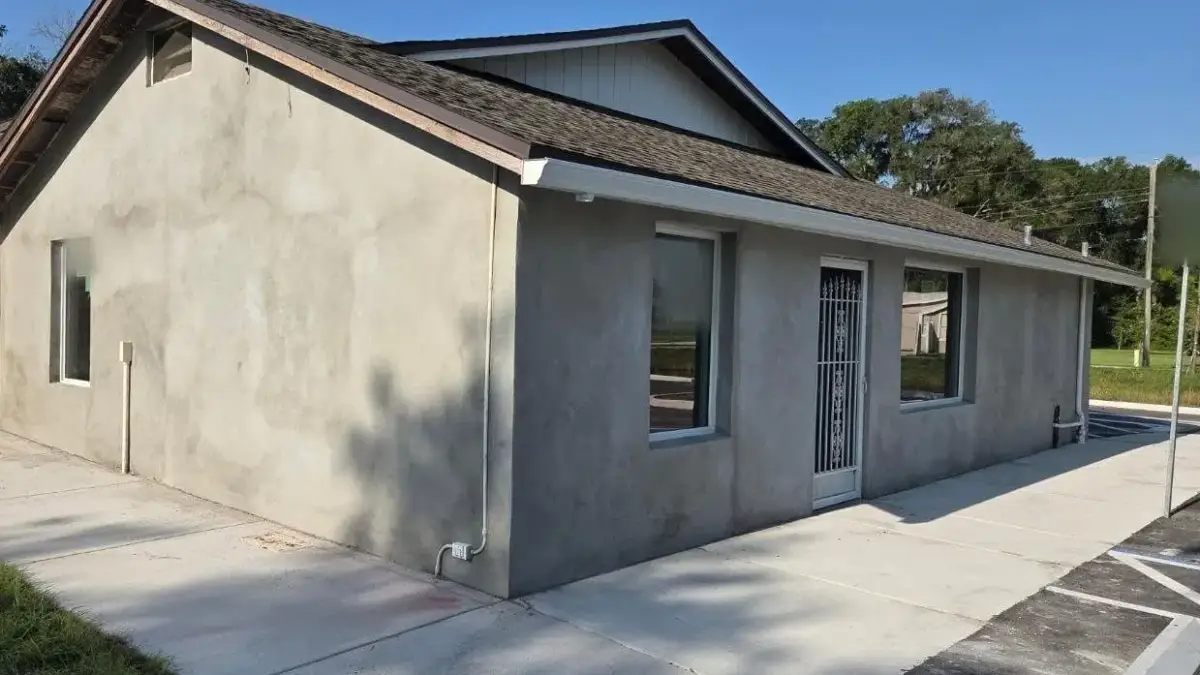
Some walls are past patching. You see patches on top of patches, a finish that sounds hollow across wide areas, or a room addition still wrapped in black paper waiting for its final coat. That’s when stucco installation, either a full re-stucco or new stucco on new walls, makes more sense than another round of repairs.
Rocket Stucco applies new stucco on additions and bare block, recoats worn walls, matches the texture to the rest of the house and paints it once it has cured. We’re licensed and insured, and every estimate comes in writing at no charge.
Repair or re-stucco: how do we decide?
We start with the cheapest fix that will hold. Most walls with a few cracks or holes only need repairs. A re-stucco starts to make sense when:
- Wide sections ring hollow when tapped, meaning the coat has pulled away from the masonry.
- The wall is covered in old patches that never matched.
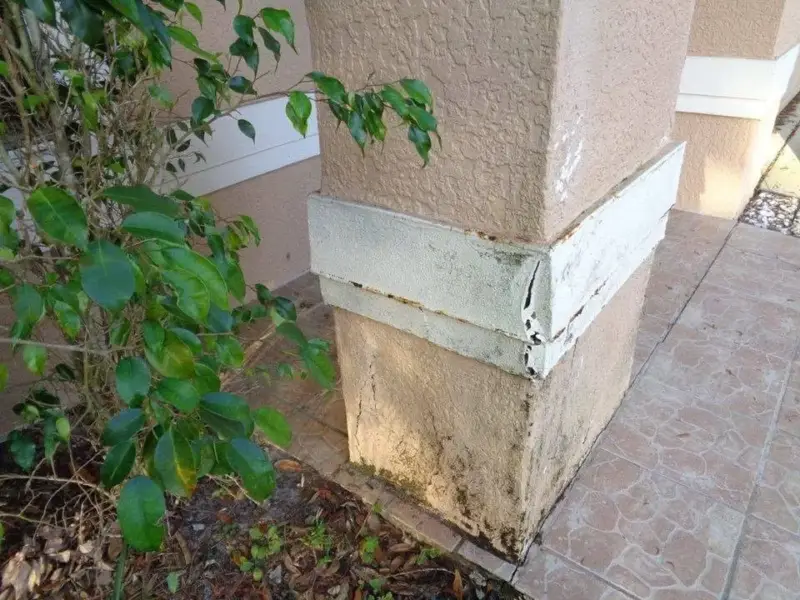
- Fine cracks spread across the whole surface like a spider web.
- You’re changing the texture of the house and want it even everywhere.
If only one side is in bad shape, we can redo that side and blend it into the rest.
What does stucco installation involve on a block wall?
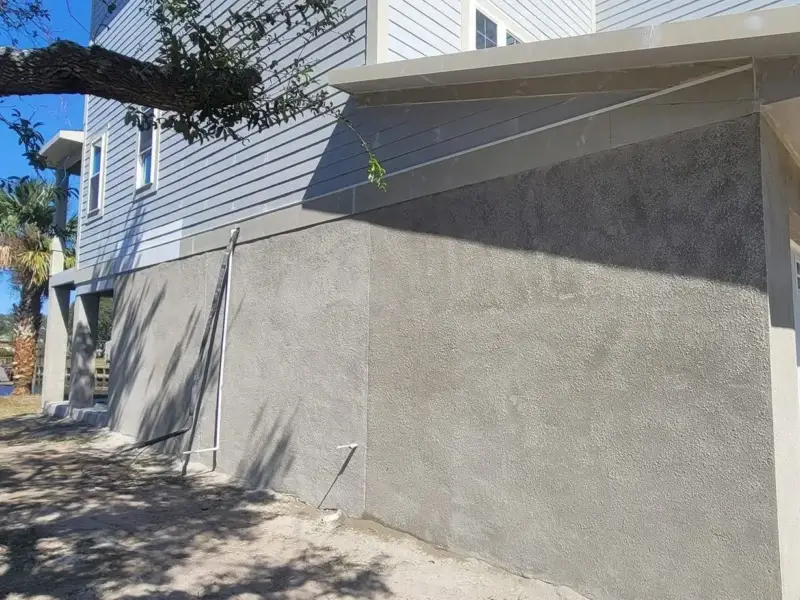
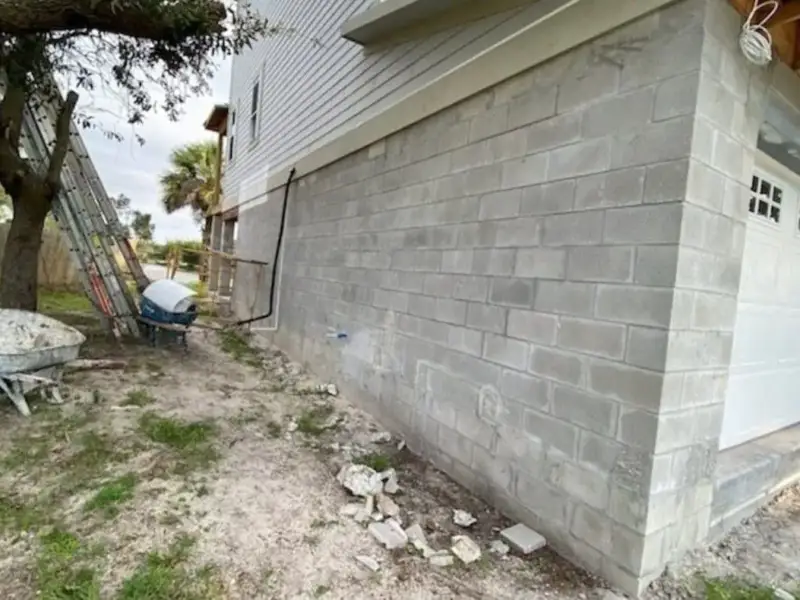
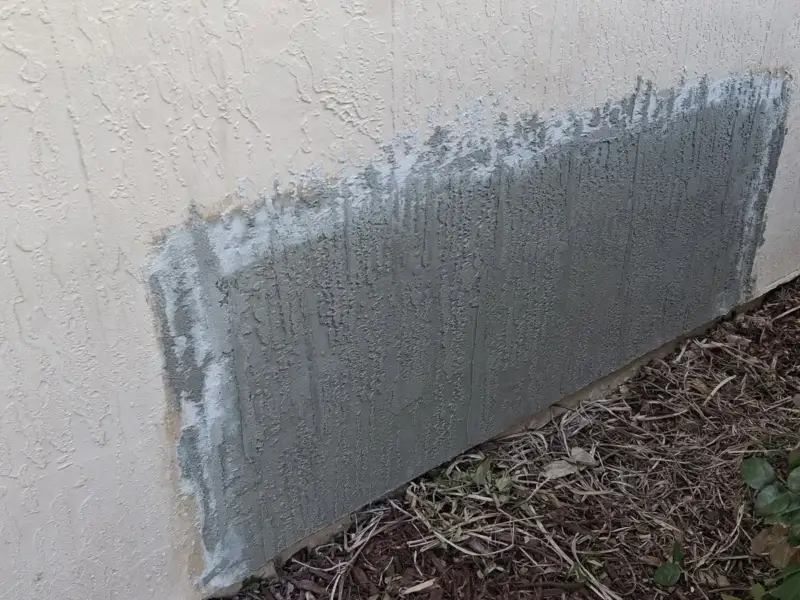
On concrete block, new stucco bonds straight to the masonry. We clean the block, dampen it, and apply the coats by hand or with a sprayer, then float or trowel the finish. A worn wall getting a re-stucco may also need loose stucco stripped off and a bonding coat before the new layers. Resurfacing an old wall with a fresh finish coat is a lighter version of the same job, used when the base underneath is still solid.
How is new stucco put on a wood-framed addition?
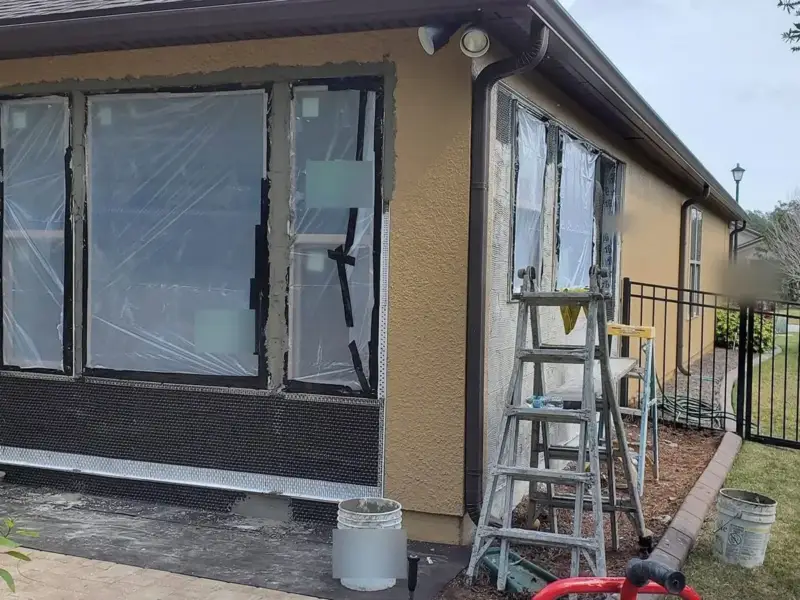
Frame walls need a few more layers, because stucco can’t stick to plywood. First comes a water-resistant barrier, usually building paper. Then metal lath is fastened over it to give the stucco something to grab. The stucco itself goes on in three coats:
- Scratch coat. The first layer is pushed into the lath and scored with lines so the next coat can grip.
- Brown coat. The second layer builds the wall out flat and true.
- Finish coat. The last thin layer carries the texture you see.
Along the bottom of a frame wall, a weep screed gives any water that sneaks behind the stucco a way out. Getting that detail right is a big part of keeping new stucco dry for the long haul.
How does a re-stucco job run from first day to last?
- Measure and plan. We walk the walls, note the windows, trim and joints, and write up the scope.
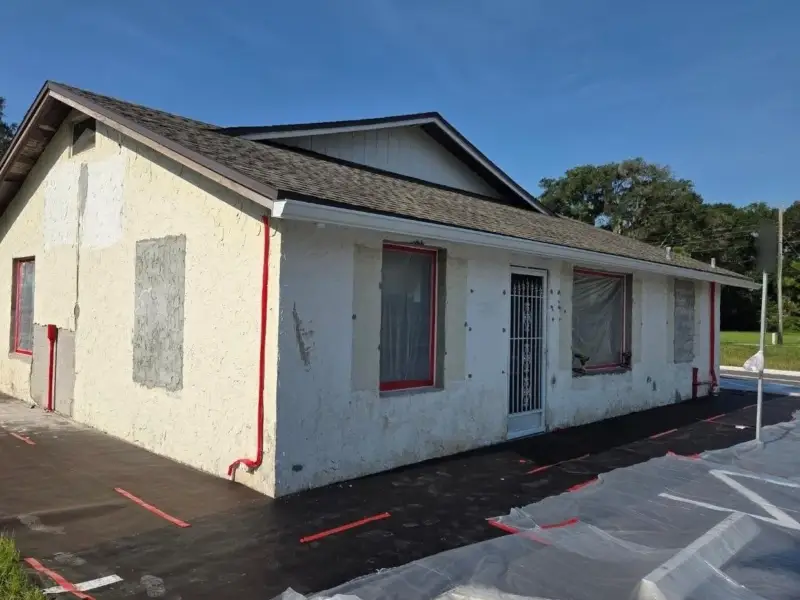
- Protect. Windows, doors, roof edges, plants and walkways are covered.
- Prep. Loose stucco comes off, cracks are opened, and new block or framing gets its paper and lath.
- Apply. The coats go on in order, each given time to set.
- Texture. The finish is matched to the rest of the house, or to the new look you picked.
- Cure, then paint. New stucco needs time to cure before paint, and then we prime and paint it.
What happens around windows and doors during a re-stucco?
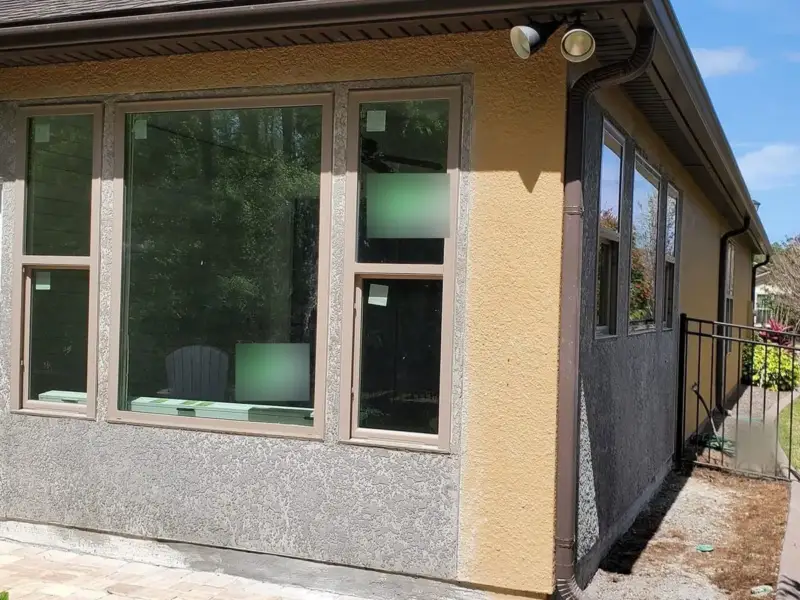
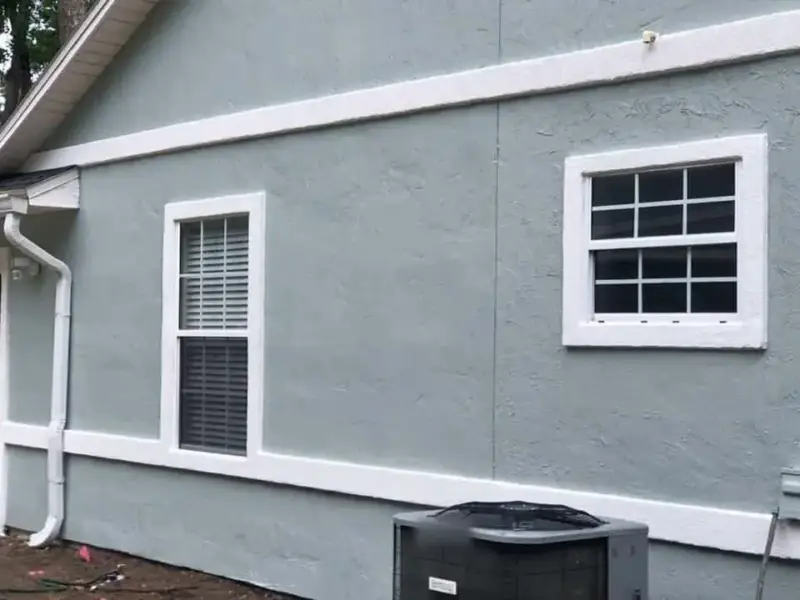
Openings get the most attention. Old caulk is cut out, and we make sure the flashing around each window sheds water outward. Casing bead, the thin metal or vinyl edge that gives the stucco a clean stop at the frame, is replaced if it’s rusted or bent. Then the new coats are worked tight to that edge, and fresh sealant goes in once the stucco is ready. A neat edge here keeps water out and makes the whole job look sharp.
Can new stucco match my old walls?
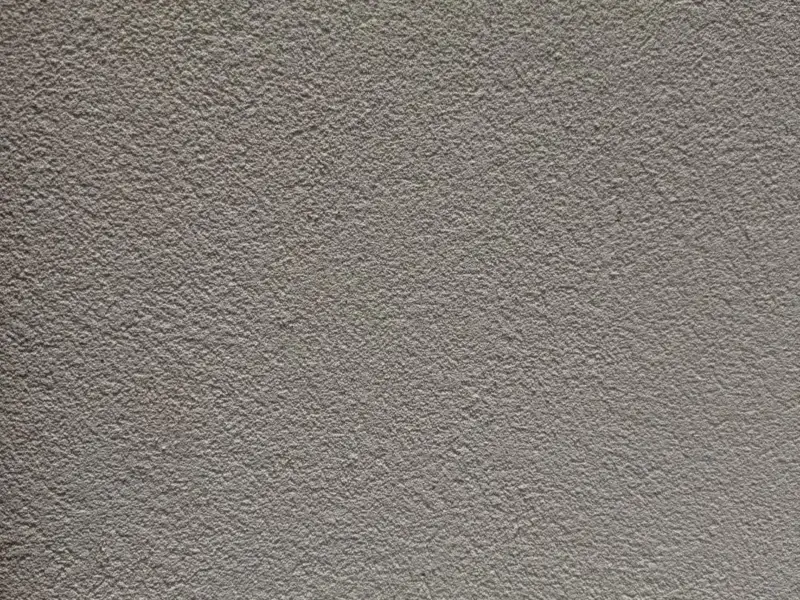
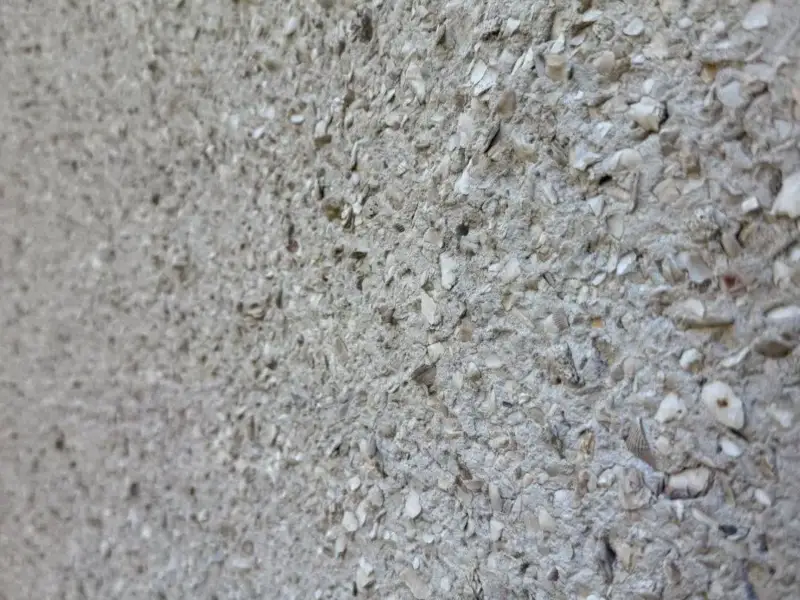
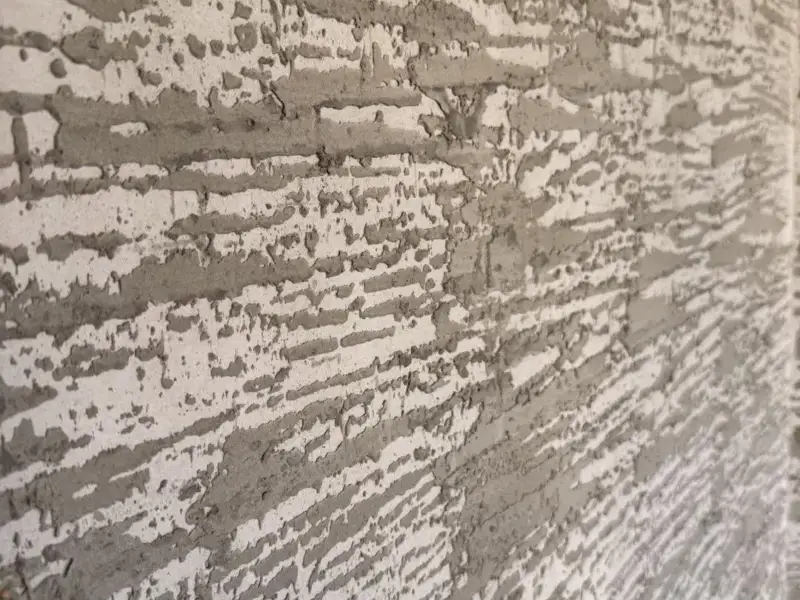
Usually, yes. Smooth, sand float and skip-trowel finishes are all common on Brevard homes, and each can be matched by hand. Older walls vary a little, so we test a small area first. The color match comes from paint, and painting the new and old walls together gives the most even look. You can read more on our stucco painting and sealing page.
Why build new stucco for Space Coast weather?
New stucco here has to handle strong sun, salt in the air near the lagoon and the beach, and summer storms that blow rain sideways. That means sound flashing around windows, a properly placed weep screed on frame walls, control joints where the wall needs room to move, and a good coat of paint once it cures. Skipping any of those shows up later as cracks and stains.
Will the job disrupt the household?
Less than most people fear. You can stay home the whole time. There’s noise when old stucco comes off, and the yard on that side is busy with mixers and scaffolding for a while. We keep walkways open, cover plants and windows, and tidy up at the end of each workday.
How do I keep a new coat looking new?
- Let it cure fully before painting, since paint rushed onto green stucco can peel.
- Keep sprinklers and soil away from the base of the wall.
- Seal small cracks early, because even new stucco gets a few hairlines as it cures.
Our crack repair page shows how we deal with those hairlines when they appear.
How much does a re-stucco cost?
Wall area drives most of the price for a re-stucco or new stucco job, with prep, trim and paint added on top. The stucco cost guide lists typical market ranges, and your own estimate is free, written and itemized.
Request a free quote from a stucco contractor who handles the painting too, or start at our Melbourne home page for everything else we repair.
Last updated