On this page
Run your hand across a sunny wall and see if it comes away white and chalky. Look for fine spiderweb lines in the paint, or a color that has faded two shades lighter than the side under the porch. That’s sun and salt air wearing through the coating, and on the Space Coast it happens faster than most people expect.
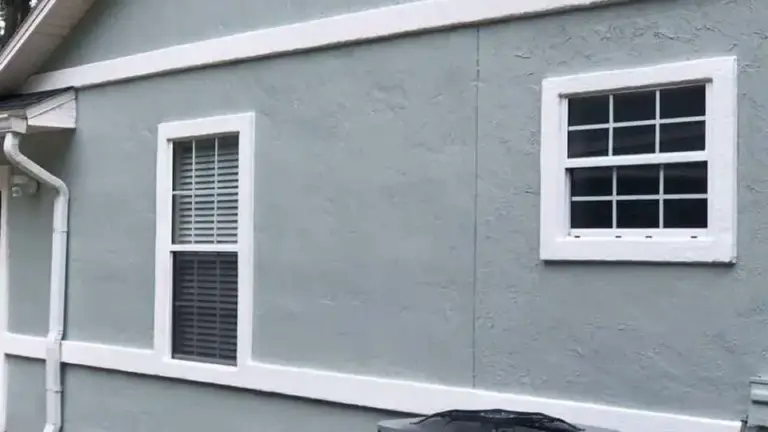
Stucco painting is the job we lead with at Rocket Stucco, because paint is the first thing standing between your wall and the weather. We repair what’s cracked or loose, then prime, paint and seal so the wall sheds rain again. Our crew is licensed and insured, and you get a free written estimate before anything starts.
What do we look at before quoting a paint job?
- Chalk. We rub the wall. Heavy chalk has to be washed off, or the new paint won’t hold on well.
- Cracks. Every crack gets marked, because paint alone won’t close one.
- Old coatings. Some walls already wear a thick elastomeric coat. Others have thin paint over bare stucco. That changes the primer and the next coat.
- Moisture. Bubbles, peeling near the ground and stains point to water that has to be fixed before any painting.
- Exposure. A wall that faces the ocean breeze or the afternoon sun needs a tougher plan than a shaded side.
Why does paint wear out so fast near the coast?
Brevard homes get strong sun most of the year. UV light breaks down the binder in paint, so the color fades and turns powdery. Salt from the Indian River Lagoon and the ocean settles on the wall and holds moisture against it. Then summer storms beat on the wall almost every afternoon. Put those together and a paint job that would last a long time up north wears out sooner here, most of all on the sides that face the water or the sun. North walls that stay shady can grow mildew instead, which needs a cleaning step before paint.
Elastomeric or acrylic masonry paint: which one fits your wall?
Both are good choices for stucco. They just do different jobs.
Acrylic masonry paint goes on in normal coats and lets the wall breathe. It holds its color well and suits stucco that’s in good shape with few cracks.
Elastomeric coating goes on much thicker and stretches. It can bridge hairline cracks and shed wind-driven rain, which is why it’s popular on Florida block homes. On a wall with many fine cracks, that stretch is a real help. The trade-off is that it breathes less, so the wall has to be dry and sound before it goes on, or it can trap moisture and blister.
We recommend one based on your wall and how it faces the weather. There isn’t a single answer for every house.
Is stucco sealing different from painting?
Yes. Stucco sealing usually means a clear, breathable water repellent that soaks into the surface. It keeps the natural look of a colored or unpainted finish and lets water vapor out while slowing rain from soaking in. A sealer won’t hide stains or bridge cracks, and it doesn’t add color. Painted walls get their protection from the paint itself, so a clear sealer is mostly for stucco that has never been painted.
Why do cracks get fixed before painting stucco?
Painting stucco over open cracks is like putting a bandage over a splinter. The line shows through within months, and water still gets in behind the fresh paint. We open and fill the cracks, patch any holes, and let the repairs cure first. Then the whole wall gets painted, so the repairs vanish under one even coat. Our crack and patch repair page explains that first step.
How does a paint job go, start to finish?
- Wash. We clean the wall at low pressure. High pressure can force water into cracks and tear up soft stucco.
- Repair. Cracks, holes and loose spots are fixed and given time to cure.
- Prime. A masonry primer or conditioner goes on where the wall is chalky, patched or bare.
- Paint. Two coats of the chosen finish go on, with extra care on the walls that face the weather.
- Trim and details. Bands, window surrounds and sills get their own color and clean lines.
- Walk-through. We walk around the house with you before we pack up.
How long should new stucco cure before it’s painted?
Fresh stucco is wet cement, and it needs time to cure before most paints go on. Paint makers often call for a wait of several weeks on brand new stucco, while small patches need far less. Humid summer weather slows curing down. We follow the label for the coating we use, so the paint bonds to the wall instead of peeling off it.
Can you match our HOA colors?
Many Brevard neighborhoods have an HOA that approves exterior colors, so get the approval in hand before paint is ordered. We can match an existing color from a chip off the wall, and we’ll paint the trim, bands and doors in the colors on your HOA’s list. Lighter colors tend to hide fading better in strong sun, and they keep the wall a little cooler too.
Do darker colors fade faster in Florida sun?
They often do. Deep blues, reds and dark grays soak up more heat and show fading sooner than light tones. That doesn’t rule them out. It just means a quality coating matters more, and the sunny sides may need touching up sooner. If you love a bold color, we may suggest it for doors, shutters or trim bands, where a refresh is quick, with a lighter body color on the main walls.
How do I keep the new paint looking fresh?
- Rinse salt and dust off the walls with a garden hose a few times a year, especially near the water.
- Trim shrubs back so they don’t rub the paint or hold moisture on the wall.
- Keep sprinkler spray off the stucco.
- Touch up chips and seal new hairlines before they spread.
- Plan a repaint when the wall starts to chalk or fade, rather than waiting for peeling.
Bubbling or peeling that keeps coming back in one spot isn’t really a paint problem. It’s water. Our water damage repair page explains how we track down the source.
What does stucco painting cost?
Paint jobs are priced on wall area, height, how much repair comes first and how many colors are involved. Typical market ranges are listed in our cost guide, and your own estimate is free and written out line by line.
Rocket Stucco is a stucco contractor that paints as well as repairs, open Monday to Saturday from 7 AM to 6 PM. Request a free quote, or go back to our stucco repair home page to see everything else we fix.
Last updated