On this page
Maybe the paint at the bottom of one wall keeps blistering no matter how often it gets touched up. Maybe a porch column has gone soft and crumbly where it meets the slab. Those are two of the most common signs we see, and they usually mean water has been sitting inside the stucco for a long time.
Stucco water damage repair means opening the wall, finding how the water gets in, replacing what it ruined and closing everything back up so it stays dry. Rocket Stucco does that work on homes across Brevard, then paints and seals the finished wall. We’re licensed and insured, and the written estimate is free.
One thing first. If rooms inside your house are wet or flooded, call a water restoration company to dry the interior. We fix the outside wall and what’s behind the stucco once the inside is under control.
What does water damage behind stucco look like?
- Paint that bubbles, peels or flakes in the same spot after every storm.
- Brown or rust-colored streaks below windows, light fixtures or hose bibs.
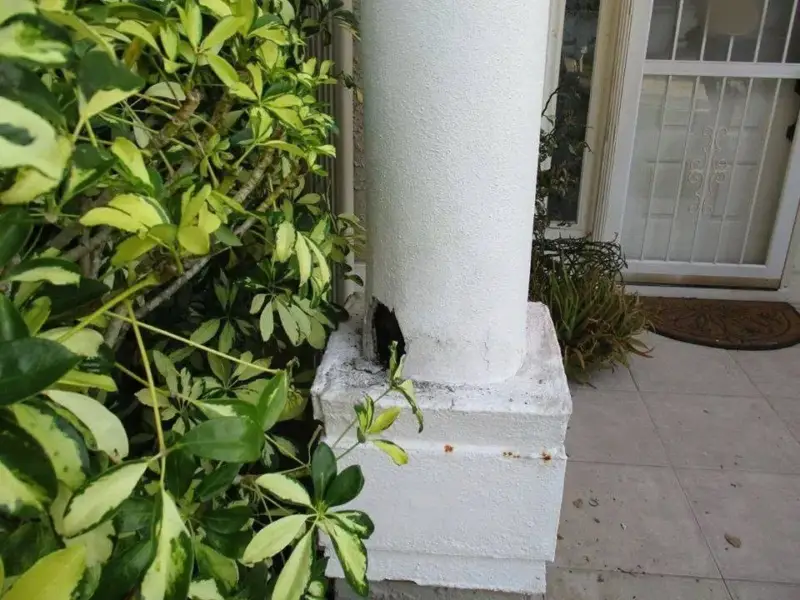
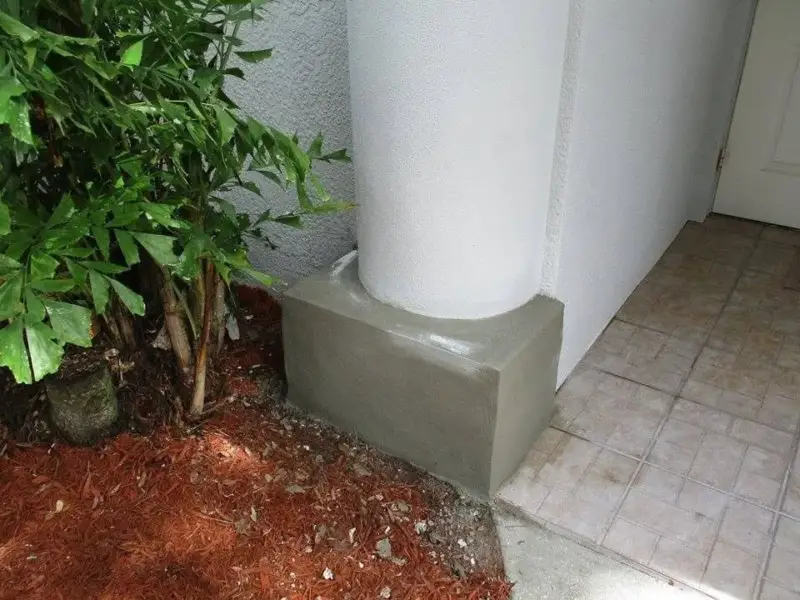
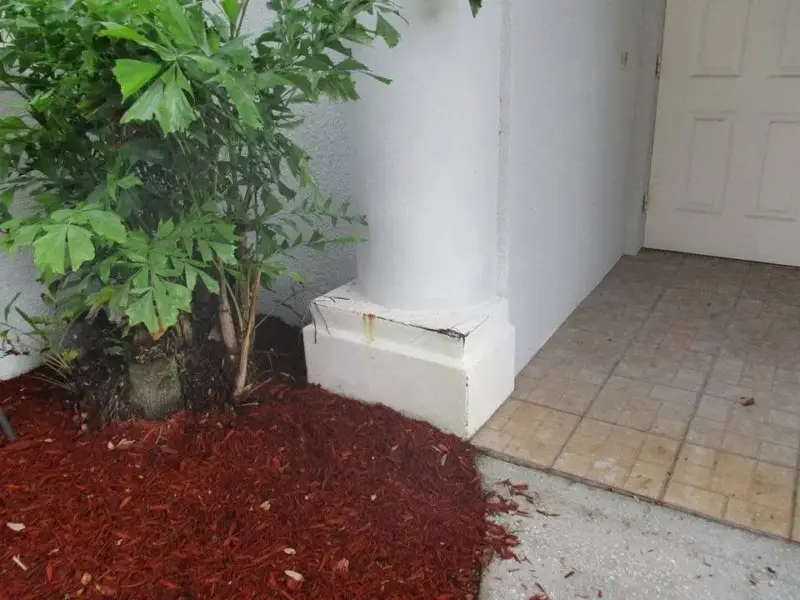
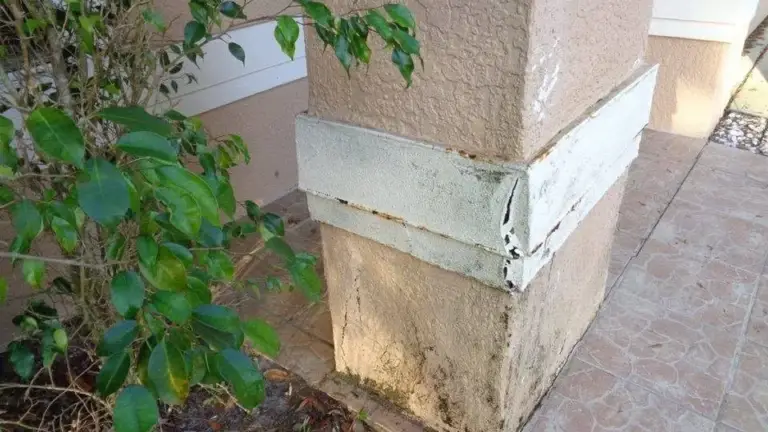
- Stucco that crumbles like wet sand along the bottom of a wall or the base of a column.
- A dull, hollow sound when you knock on the wall, or a spot that gives when you press it.
- White, powdery salt deposits that keep coming back on the same patch of wall.
- Inside: swollen baseboards, damp drywall or a musty smell along an outside wall.
One sign alone is worth a look. Two or three together usually means the problem has been growing for a while.
Where does the water get in?
Stucco isn’t a raincoat. It drinks in some rain during each storm, then lets it out on the next sunny day. The problems begin when more comes in than can get back out. On Space Coast homes, these are the usual entry points:
- The base of the wall, where sprinklers spray it every morning and mulch or soil is piled up against it.
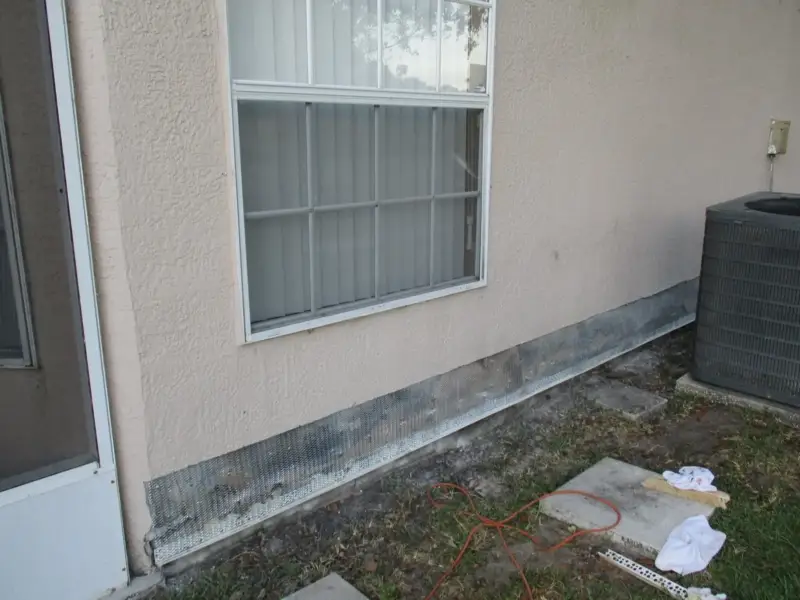
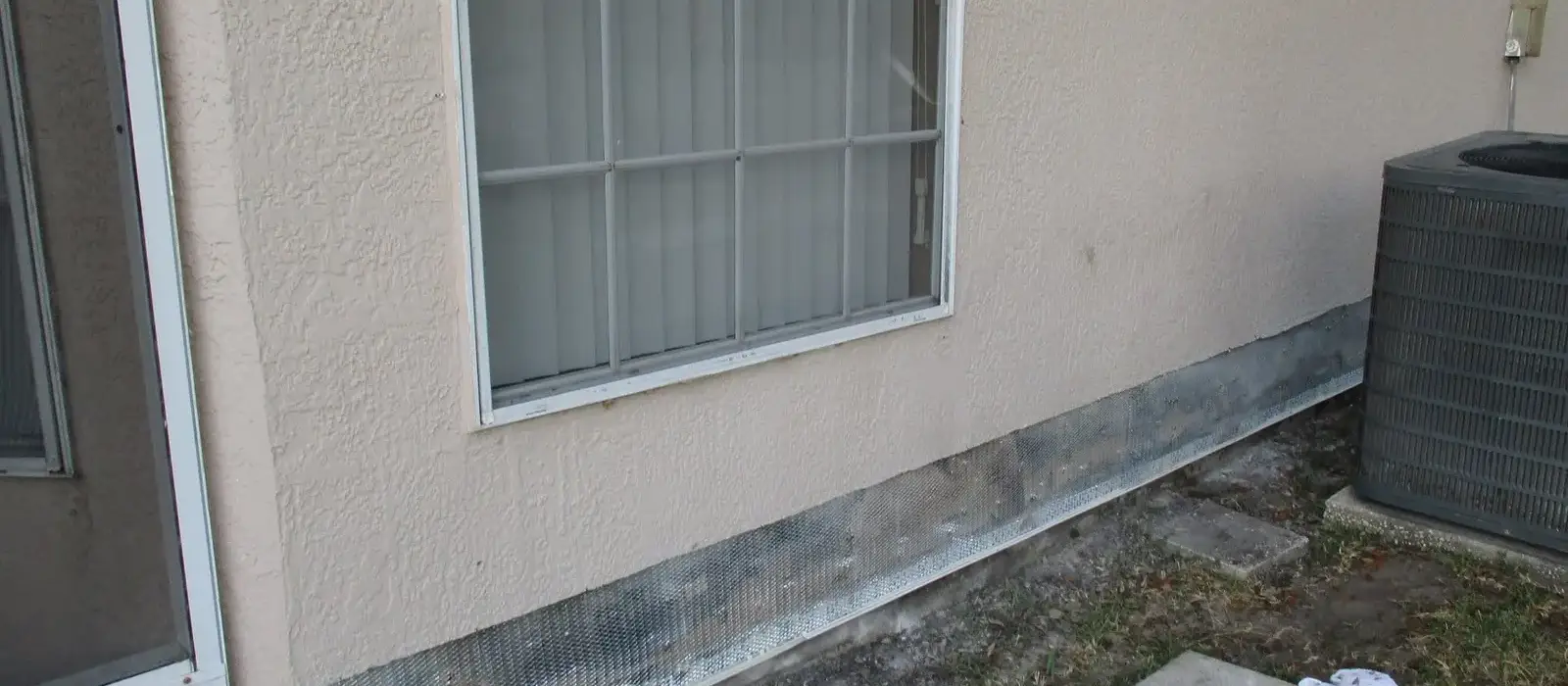
- A buried or missing weep screed. That’s the metal strip along the bottom of the stucco that lets trapped water drain out. When dirt covers it, the water has nowhere to go.
- Window and door corners where the sealant has shrunk or split.
- Porch and entry columns that stand in puddles on the slab.
- Roof-to-wall joints and gutters that spill onto the wall.
- Open cracks that let wind-driven rain in during summer storms and hurricane season.
What do we check before opening anything?
We start outside and work in. We tap and press along the base of the wall, follow stains back to where they begin, and look at how the yard, the sprinklers and the gutters send water toward the house. On frame additions and second floors we feel for soft spots that point to wet sheathing. Then we mark the area we expect to open and explain why, so you know what the estimate covers before a single piece of stucco comes off.
We also ask a few questions. When did the stain first show up? Does it get worse after storms, or after the sprinklers run? Has anything been added or changed near that wall? The answers often point straight to the cause.
How does the repair go, from start to finish?
- Protect the area. Plants, walkways and windows are covered, and mulch is pulled back from the wall.
- Cut back to sound stucco. Wet, crumbling material comes off until we reach a solid, dry edge.
- Let it dry. The opened wall gets time to dry out, which is often the slowest part during the rainy months.
- Fix what’s behind it. Rusted lath and screed are replaced. On wood-framed walls, soaked sheathing and any rotted framing near the damage are cut out and renewed first.
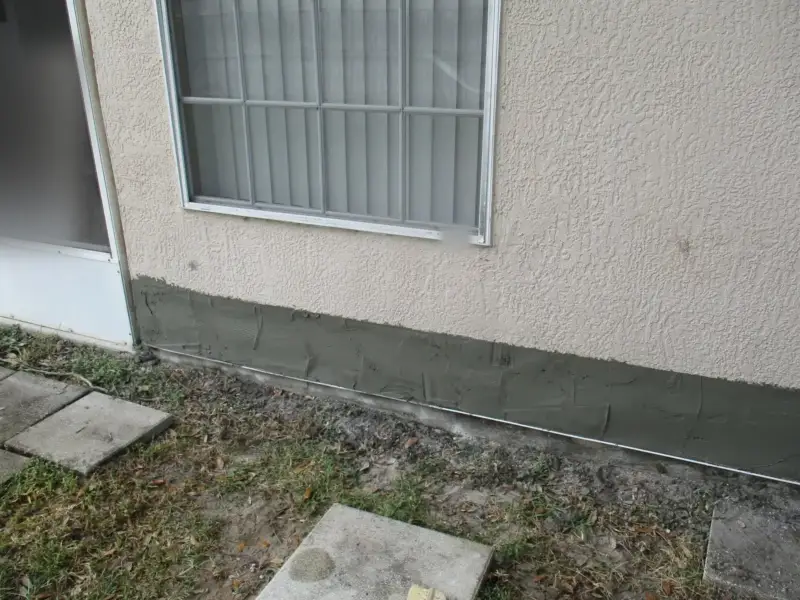
- Rebuild the layers. A water barrier and new lath go on where they’re needed, then the base coats are built up to the depth of the old wall.
- Match the finish. The final coat is textured to blend with the wall around it.
- Paint and seal. After the new stucco cures, we prime it and paint the wall so the repair is protected and hard to spot.
Why do wall bases and columns fail first?
Gravity and splash do most of the damage. Rain runs down the wall and collects at the bottom. Sprinklers add a daily soaking on top of that. Soil and mulch hold the water against the stucco like a wet sponge. Over a few years, the lowest foot of the wall stays damp most of the time, and that’s where the stucco starts to crumble.
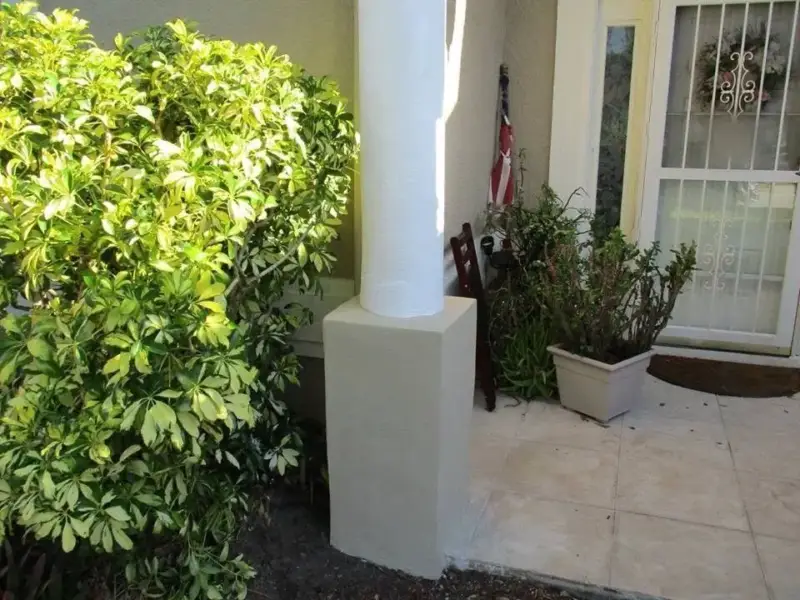
Columns have it even worse. A porch column often sits on a slab that holds puddles after every storm, and water wicks up into its base. Many column bases we’re called about have split trim bands and stucco that falls away in your hand. The fix follows the same idea as a wall base: cut it back, rebuild it with new lath and a proper drained bottom edge, then paint it.
Why are frame additions more at risk?
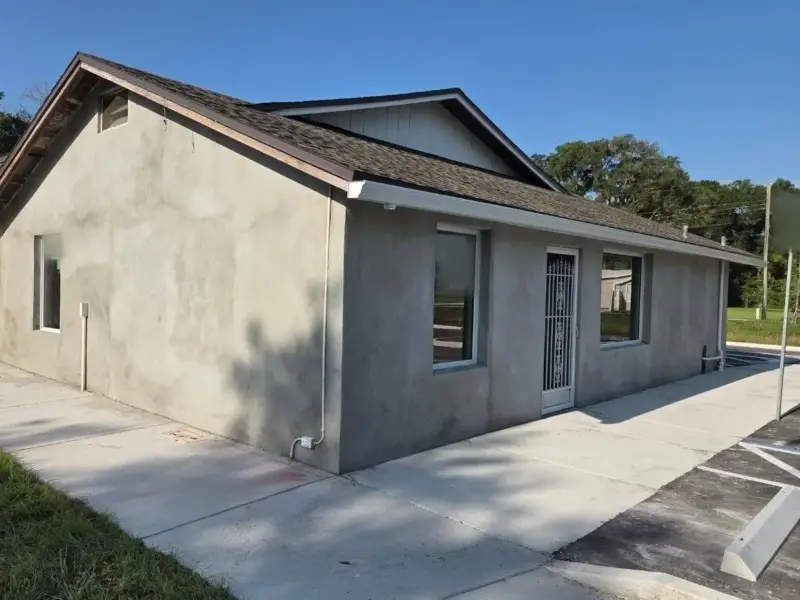
Many Brevard block homes have a later addition, a second floor or a gable end built from wood. Those sections hide the most damage, because wood soaks up water and stays wet. Under the stucco sits a layer of building paper, then sheathing, then the studs. When that paper tears or the flashing over a window is missing, water runs down inside the wall where nobody can see it. By the time the stucco outside feels soft, the sheathing behind it may be spongy too. That’s why we press along frame walls closely and open a small test area when something feels off, rather than guessing.
Is stucco remediation the same thing as a repair?
People use the words loosely. Stucco remediation usually means a bigger job: opening large areas, sometimes whole walls, to find and fix hidden water damage, often on wood-framed houses. A repair is smaller and targeted, like one wall base or a pair of columns. Most block homes in Brevard need repairs rather than full remediation, because block doesn’t rot. Frame additions, second stories and some newer homes are where remediation comes up more often.
Either way, we’ll tell you which one your house needs, and why, before you sign anything.
What will the wall look like when we’re done?
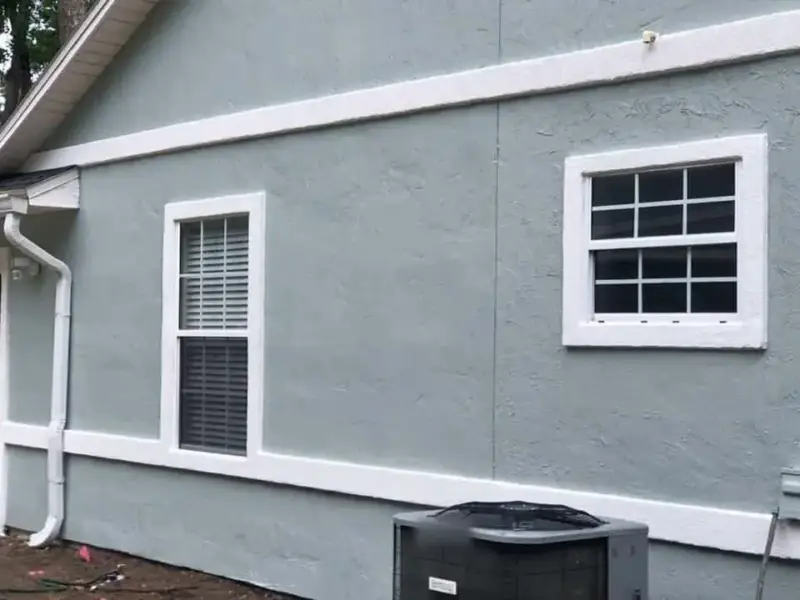
A finished repair should be hard to find. The new base is built to the same depth as the old wall, so there’s no lump or dip at the edge. The texture is worked to match, and the paint runs from corner to corner when the old color has faded. At the bottom, you’ll see a clean weep screed sitting a few inches above the soil. Columns get crisp new trim bands. Most people can’t point to the repaired section a month later, and that’s the goal.
What about storm and hurricane water damage?
Storms can crack stucco, punch holes in it and drive water into gaps that stayed dry for years. The damage can show up weeks later as stains or bubbles. After a big storm, walk around the house and look at window corners, wall bases and anything that took a hit from flying debris.
Whether a repair is covered is up to your insurer and your policy. We don’t handle claims. What we can give you is an itemized written estimate that lists each repair, which you can pass along with your own photos.
How does salt air speed up the damage?
Near the Indian River Lagoon and along the beach, salt settles on walls with every breeze. Salt draws in moisture and speeds up rust on metal lath, corner bead and screed. Once that metal swells with rust, it pushes the stucco off the wall from the inside. Rust stains low on a wall deserve attention on any home close to the water.
How do I keep the wall dry after the repair?
- Aim sprinkler heads away from the stucco.
- Keep soil and mulch a few inches below the bottom edge of the stucco, so the weep screed stays visible.
- Clean the gutters and point downspouts so they empty well away from the house.
- Keep the wall painted, and fix new cracks while they’re still small.
Small cracks are the usual way water gets started. Our stucco crack repair page covers that work, and the painting and sealing page explains the coatings that help keep rain out. Foam-backed synthetic stucco is repaired a different way, which is covered on our EIFS repair page.
What does it cost to fix water damage in stucco?
Water damage is the hardest repair to price from the driveway, because nobody knows how far it goes until the wall is open. Size, height, what’s behind the stucco and painting all play a part. The stucco repair cost guide shows typical market ranges. Should the opened wall reveal more rot or rust than expected, we pause, walk you over to it, and price the extra work before touching it.
To get started, request a free quote or give us a call, Monday through Saturday. Rocket Stucco is a licensed and insured stucco contractor, and our page on stucco repair in Melbourne covers the rest of what we do.
Last updated